
A customer payment plan splits the price of a service into smaller scheduled payments, so a customer who can't pay everything up front can still say yes. To offer one, pick which services get plans, write clear terms, set up two or three plan options at checkout, and use software that charges automatically and follows up on missed payments.
What Are Customer Payment Plans?
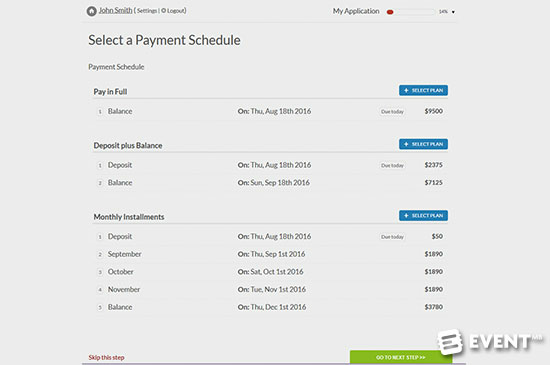
A payment plan is an agreement on when and how a customer pays. For example, a $5,000 summer program might offer $1,000 a month for five months, or two larger installments. Most businesses list two or three plans at checkout, each showing every due date and amount, and let customers turn on autopay so each payment is charged automatically.
A real example: The Greenway Foundation's SPREE camp registers families through Regpack and lets parents pay $830 in full or a $332 deposit followed by two monthly payments of $249.
See your numbers
Get a personalized, no-commitment savings report.
Have a question?
Ask Regpack AI anything.
Why Offer Payment Plans?
- More sales: customers who would balk at one large charge can pick a plan that fits their budget.
- Predictable cash flow: scheduled payments work like recurring payments, so you know what's coming in each month.
- Loyalty: flexible payment is something customers remember, and it sets you apart from competitors who only take payment in full.
What Are the Risks, and How Do You Reduce Them?
The two main risks are customers forgetting or ignoring an installment, and payments failing by accident, such as an expired card. Both mean staff time spent chasing money. Reduce them with:
- Autopay, so customers don't have to remember
- Automatic reminders before each due date and retries when a payment fails
- A clear late fee in your written payment policy
- For large, one-off deals, a conversation with the customer before agreeing to a plan
What Do Payment Plans Cost?
The main cost is the software that runs them, which may charge a per-transaction fee, a flat monthly fee or both. Larger businesses may also need staff to follow up on late payments. For most, the extra sales outweigh these costs.
How Do You Offer Payment Plans to Customers?
- Pick the services. Start with expensive services where price has cost you customers.
- Write the terms. Cover payment frequency, late fees, renewals, cancellations, refunds and accepted payment methods. Customers agree to them at checkout.
- Set the plans up online. In Regpack, customers choose a plan, pay by credit card, ACH, Apple Pay, Google Pay, or Link Pay, turn on autopay and track every payment in their own portal. Receipts, reminders and reporting run automatically once set up.

What Should You Do if a Customer Misses a Payment?
Assume it was an accident. A day or two after the due date, send a friendly reminder with the amount, the original due date, a link to pay or update their card, and who to contact. Most customers pay after one reminder. If they don't, follow up with any late fee from your policy and a firm date. See how to write a late payment letter.
Frequently Asked Questions
How many payment plans should I offer?
Two or three is usually enough, such as pay in full, deposit plus balance, and monthly installments. More options can confuse customers.
Should payment plans include a deposit?
A deposit secures the customer's spot and lowers your risk if later payments fail. Many programs collect one at sign-up and spread the rest.
How can I make paying easier overall?
Offer several payment methods, autopay and clear receipts. More in our guide to improving the customer payment experience.